Under a Crimson Sky

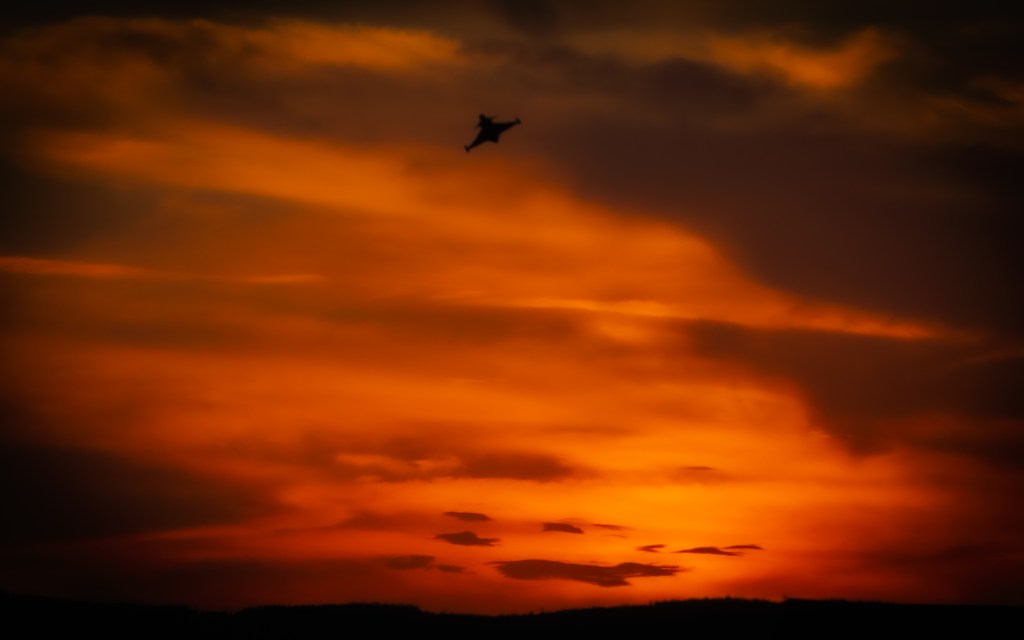
The work of remaking ourselves in this new garden continued, but the shadow of our past was never truly gone. Aethel, now a pillar of the community, often found herself at the edge of the geothermal fields, the heat rising like a warm breath from the deep Earth. She would look up at the fiery, blood-orange twilight, the unique, complex cloud structures that the Xylarans were actively shaping, and think of Xylar Prime. It was a controlled mirroring; the very elements that had stripped their first home were now being harnessed here, by the advanced, sleek lines of the atmosphere-tending shuttles, to build a sanctuary.


But the memory was more than a legacy; it was a warning. As the colony took root, a silent, deep-space sensor, an echo from their ancient flight, activated. Aethel’s wrist-comp pinged a single, clean sequence. It wasn’t Xylaran. It wasn’t Earth-made. The console displayed a minimalist map of the solar system, and Earth—their precious green and blue planet—was highlighted with a single, blue, pulsating beacon, alongside a cryptic data burst. It was a ‘received’ signal, and it hadn’t come from another Ark. They were not alone, and their existence was now registered on a galactic network that was not their own.
The Last Light of Xylar Prime

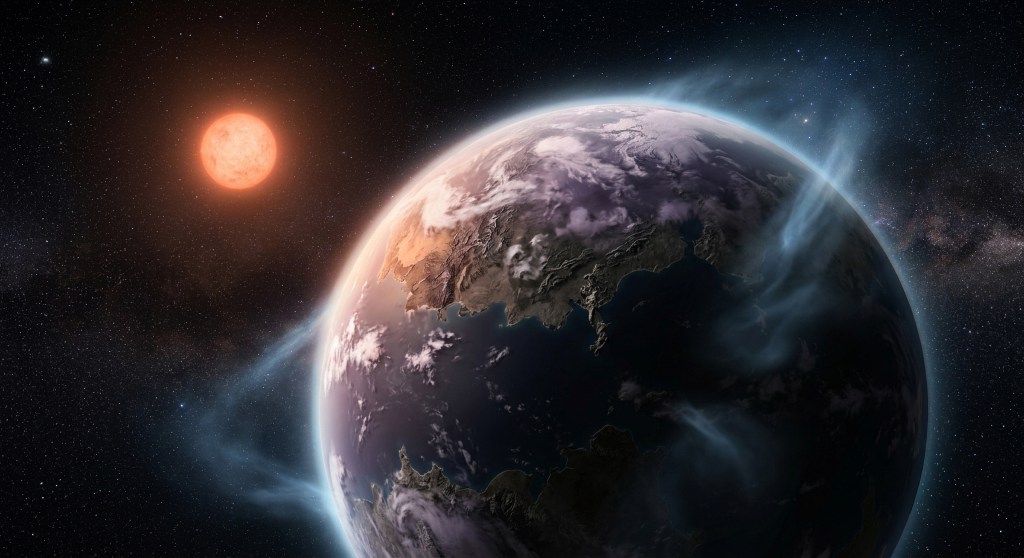
“This was our cradle,” Captain Aethel murmured, tracing the edge of the large, circular viewscreen in the command center of the Ark Veridia. The screen didn’t show stars; it held a single, devastating image: their dying homeworld, Xylar Prime, captured by the final, automated reconnaissance probe.
Aethel’s gaze lingered on the swirling blue-white plumes of atmospheric gas leaking into space. To her people, the Xylarans, it was the sound of their world’s last breath being torn away. Millions of years ago, Xylar Prime had been the jewel of the galaxy, a planet of vast indigo oceans and terracotta continents, powered by the benevolent, steady embrace of a golden star. It was an era of unprecedented peaceful engineering and prosperous life.

But golden ages are fragile.

The star, once constant, began to swell and darken, transitioning into a volatile, flaring red dwarf. Xylar Prime, caught too close, became tidally locked. The day-side transformed into a scorched, cracked desert, forcing life to retreat into the narrow twilight zone and vast subterranean networks. Over centuries, the star’s violent solar flares stripped the upper atmosphere away, peeling the atmosphere directly off the crust.
The image on the screen was a testament to impossible survival. The atmospheric venting visible from orbit was actually the energy footprint of the colossal interstellar mass drivers built by the Xylarans in their final decades. Unable to save their planet, they converted the kinetic fury of their world’s erosion into thrust, launching fleet Arks into the unknown dark.
The fleet drifted for two million years. Generation upon generation lived and died in the silent void, preserved only by a fading memory. Many Arks fell silent in the deep space between stars, but the Veridia endured.

Just as power reserves reached critical levels, a distant beacon pinged. A new star system. A stable yellow G-type star with a thriving third planet. When the surviving crew awoke from cryo-sleep, they looked out at a world rich with green continents and endless, vibrant blue oceans. Aethel descended to the surface and placed a polished crystal on the damp soil—a tiny holo-record containing the final image of Xylar Prime.
She looked up at the warm, gentle sun of Earth, taking her first breath of a new atmosphere.
“Here,” she whispered to the quiet wilderness, “we begin again.”

The Obsidian Spire

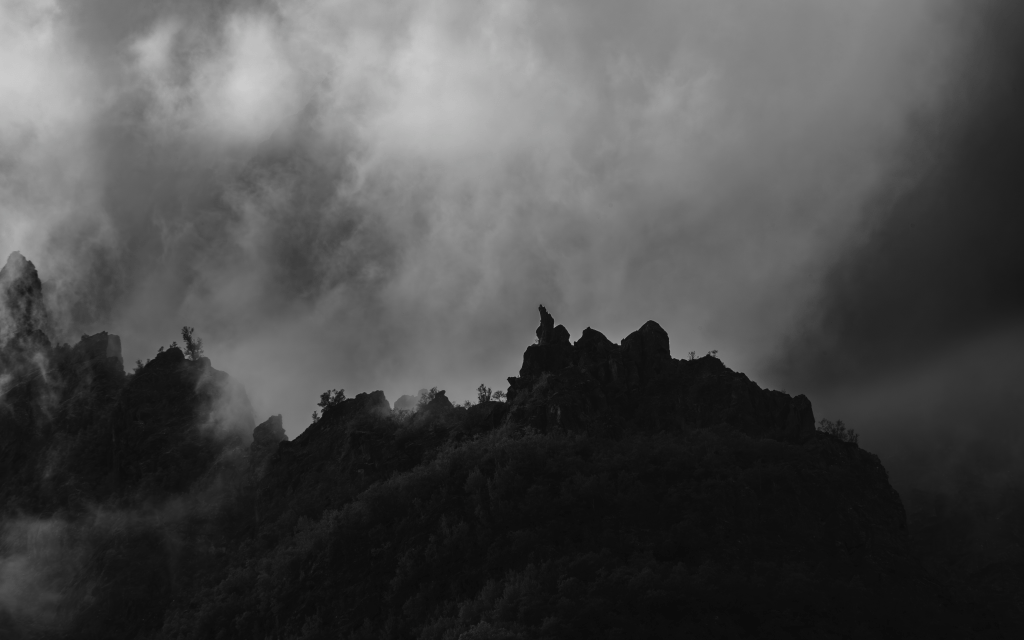
The mist does not merely drift over the Jotun-Spires; it breathes.

In the silence of the black peaks, the stone remains vigilant. Folklore suggests these jagged crowns are not rock, but the calcified remains of the First Kings—monstrous titans caught by the sun’s first rays an eon ago.

At the center of the ridge stands the Obsidian Spire, a sharp, singular tooth of basalt pointing toward the churning grey heavens. It is said that when the clouds thicken to the color of bruised iron, the veil between realms thins. Those who stand beneath the spire do not see shadows; they see the ancestors moving within the fog, waiting for the long winter when the sun never rises, and the stone will finally soften back into flesh.

The mountain is patient. It has outlasted the gods, and it will outlast the stars.

The Old Mac

Two billion years after humanity was gone, when continents had shifted like slow tides and the atmosphere was thin and burnt by ages of solar fire, something moved across the surface of the dead world.

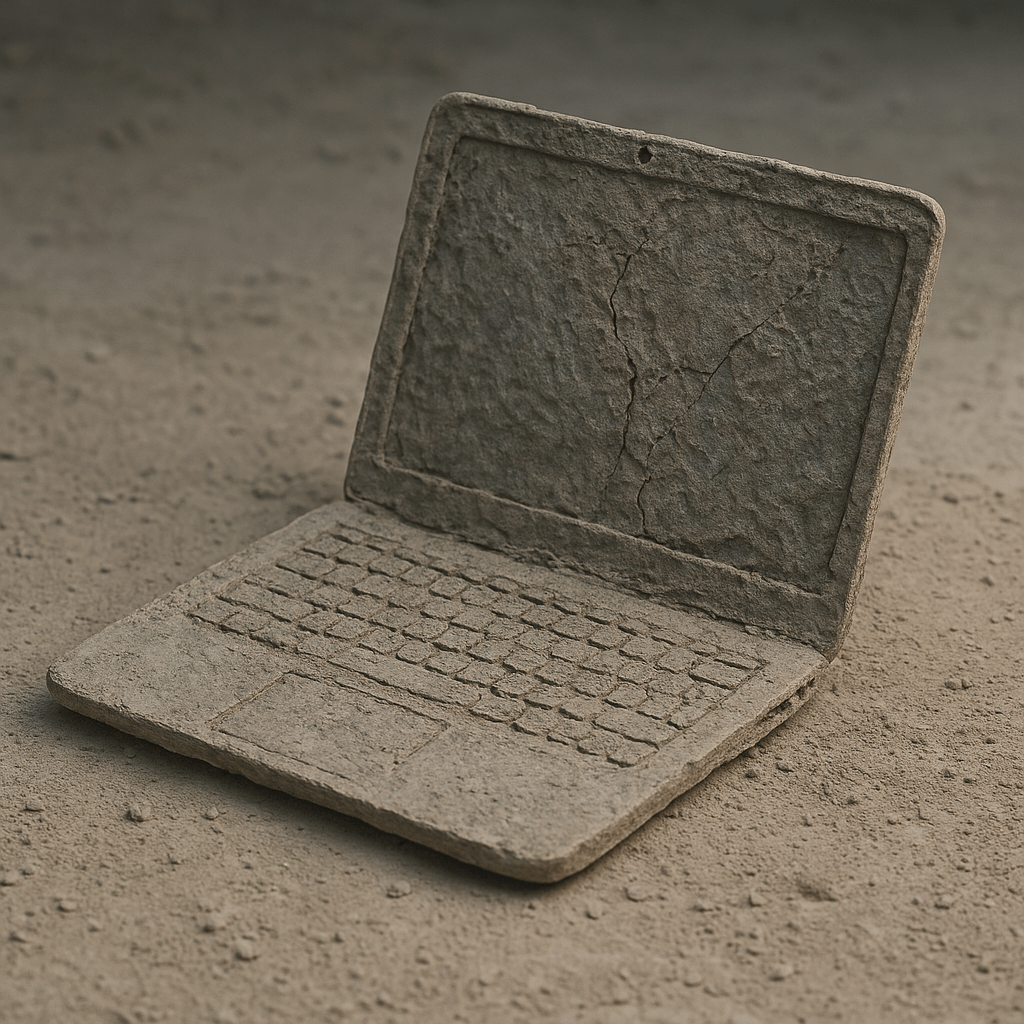
It had no name. It did not need one. It was not alive in any human sense—more a wandering process of minerals, slow magnetic thought and crystalline memory. It flowed, almost like thinking sand, across what had once been the floor of an ancient vault. There, half-buried in sediment the color of ash, it detected a foreign pattern: a shape too regular to be geological, too symmetrical to be an accident.

It uncovered the object.

Old Mac

A shell of metal, impossibly thin for such age, folded like a fossil of intent. The surface was cracked, but still hinted at design—hinges, keys, a screen that had once held light. To the entity, it was a riddle: something built for purpose, yet the purpose was gone like vapor.

It probed the object with careful pulses. Inside, it found ruins of order—atoms arranged once with precision, now slumped like collapsed stars. Where human hands once typed thought into electrons, there was only the silence of entropy. It could not interpret function, but it recognized one thing: this object had been created by something that wanted to know itself, to shape reality with symbols, to speak.

The entity decided the object mattered.

Not for what it could do, but for what it implied—that long before oceans boiled and continents died, there had been creatures who built fragile machines to store memory, to express ideas, to dream.

It left the vault slowly, carrying the corroded MacBook not as a tool, but as a question.

Who were the makers?

Why did they vanish?

Did they know their creation would outlive their bones?

It had no answer. Only the artifact remained—mute, ancient, a final whisper of a species that once looked up at the stars and asked the very same things.